
I blogged a week or so ago about the worrying fact that the Association of Chief Police Officers (ACPO) were encouraging people to send sensitive personal data over an unsecure HTTP connection.
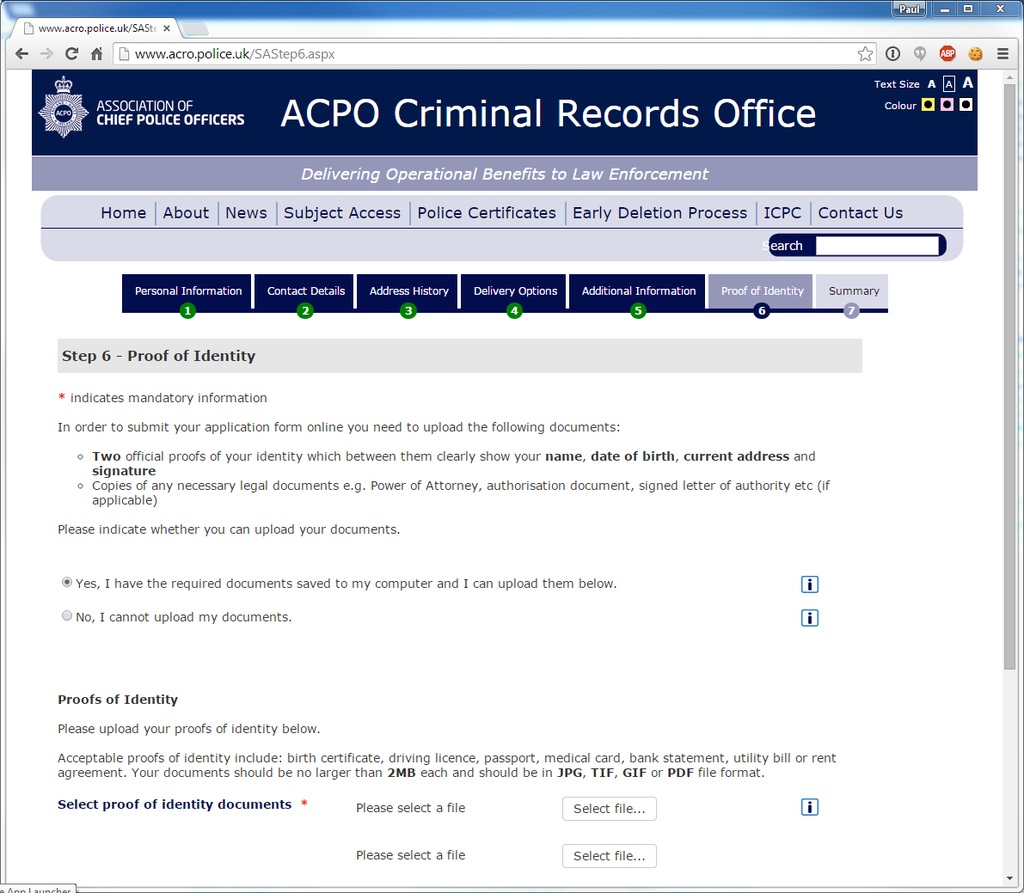
a tweet…by Information Security consultant Paul Moore alerted that ACPO’s criminal records office has a website which invites data subjects to make an online request but, extraordinarily, provides by an unencrypted http rather than encrypyted https connection. This is such a basic data security measure that it’s difficult to understand how it has happened…
Well now, thanks to Dan Raywood of ITSecurity Guru, we have a bit more information about how it did happen. Dan had to chase ACPO several times for a comment, and eventually, after he had run the story, they came back to him with the following comment:
The ACPO Criminal Records Office (ACRO) became aware of the situation concerning the provision of personal data over a HTTP rather than a encrypted HTTPS connection on Tuesday February 24. This was caused by a contractual oversight. The Information Commissioner was immediately advised. The secure HTTPS connection was restored on February 25. We apologise for this matter.
It’s good to know that they acted relatively quickly to secure the connection, although one is rather led to wonder whether or when – had not Paul Moore raised the alert – ACPO would have otherwise noticed the problem.
But there is potentially a lot of significance in the words “caused by a contractual oversight”. If ACPO are saying that a contractor is responsible for the website, and that it was the contractor’s error which caused the situation, they should also consider the seventh data protection principle in the Data Protection Act 1998 (DPA), which requires a data controller (which ACPO is, in this instance) to take
Appropriate technical and organisational measures…against unauthorised or unlawful processing of personal data and against accidental loss or destruction of, or damage to, personal data
but also
Where processing of personal data is carried out by a data processor on behalf of a data controller, the data controller must in order to comply with the seventh principle—
(a)choose a data processor providing sufficient guarantees in respect of the technical and organisational security measures governing the processing to be carried out, and
(b)take reasonable steps to ensure compliance with those measures
What this means is that a failure to choose a data processor with appropriate security guarantees, and a failure to make sure the processor complies with those guarantees, can mean that the data controller itself is liable for those failings. If the failings are of a kind likely to cause substantial damage or substantial distress, then there is potential liability to a monetary penalty notice, to a maximum of £500,000, from the Information Commissioner’s Office (ICO).
In truth, the ICO is unlikely to serve a monetary penalty notice solely because of the likelihood of substantial damage or substantial distress – it is much easier to take enforcement action when actual damage or distress has occurred. Nonetheless, one imagines the ICO will be asking searching questions about compliance with the contract provisions of the seventh principle.
Thanks to IT Security Guru for permission to use the ACPO quote. Their story can be seen here.
The views in this post (and indeed all posts on this blog) are my personal ones, and do not represent the views of any organisation I am involved with.

 informationrightsandwrongs