Category Archives: consent

Lib Dems in breach of ePrivacy laws?

As I’ve written on several occasions recently, the sending of direct marketing emails without the consent of the recipient is, as a general principle, unlawful under European and domestic law.

The Information Commissioner’s Office (ICO) guidance makes clear that promotion of a political party, campaign or candidate is “direct marketing” for the purposes of the Privacy and Electronic Communication (EC Directive) Regulations 2003 (PECR):

We take a broad view of what constitutes marketing and are satisfied that it is not only the offer for sale of goods or services but also includes the promotion of the aims and ideals of any organisation including political campaigns.
On 20 July I noted this on the Liberal Democrats’ home page

 
libdem
A campaign to end Female Genital Mutilation is a worthy one (and not a party political issue) and one I’m happy to put my name to. However, I did have my suspicions, so set up a new email address, entered that into the box, and clicked “I agree”. There was no indication of what would happen with my email address once I had done this, although there was, at the very foot of the page, a small unobtrusive link to a “privacy policy” (of which more later).
 
What did happen was, firstly, and straight away, I received the following email
receipt1
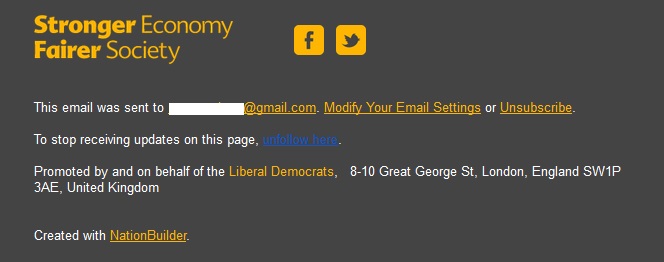
 which was fair enough. At the foot of that email was this message
receipt
again, fair enough, and that should be the end of my engagement with the Lib Dems.
  
But, you will perhaps be unsurprised to hear, it wasn’t. Two days later I received this, from Lynn Featherstone MP

featherstone
which at least was on the subject of FGM, but I was surprised she considered herself my “friend”. And two days after that I found I’d made another friend:
nick
So, a few days after I’d expressed my support for a non-party-political campaign, I was on first name terms with a political party leader, who was sending me an unsolicited marketing email. Which takes us back to PECR, and consent, and my myriad previous blog posts.
 
I thought I’d check exactly what the Lib Dems website privacy policy says. Of course there’s the usual guff about taking privacy seriously, but it goes on to say
If you provide your email address…we may use the email address to send you further information in the future. You may at any point request not to receive such information any more.
And there it is, in clear terms – a statement of non-compliance with the law. They cannot, under regulation 22(2) of PECR, infer consent to receive marketing emails merely because someone has provided an email address. I will be complaining to the Lib Dems, and, if necessary, the Information Commissioner’s Office.
2 Comments

Filed under consent, Data Protection, Information Commissioner, marketing, PECR, privacy notice

ICO responds to my concerns about PECR compliance

In assessing one’s own compliance with the law, or in advising a client on the law, or in pontificating on one’s blog about the law, one is well advised to refer not only to the law itself (whether in the form of legislation or precedent at common law), but also codes of practice, and guidance. When the law in question is the Privacy and Electronic Communications (EC Directive) Regulations 2003 (PECR), which are enforced and overseen by the Information Commissioner’s Office (ICO), it is natural that one would refer – in addition to PECR themselves, and the European Directive 2002/58/EC to which PECR give domestic effect – to the ICO’s own PECR guidance, and, particularly when it comes to electronic marketing, the guidance on Direct Marketing.

So, when the latter guidance says

Organisations must give the customer the chance to opt out – both when they first collect the details, and in every email or text. Organisations should not assume that all customers will be happy to get marketing texts or emails in future…It must be simple to opt out. When first collecting a customer’s details, this should be part of the same process (eg online forms should include a prominent opt-out box…

it would be reasonable to assume that an organisation which did not do this would be, at least if not in direct breach of PECR, sailing close to the wind. The relevant regulation (22(2)) of PECR says that

a person shall neither transmit, nor instigate the transmission of, unsolicited communications for the purposes of direct marketing by means of electronic mail unless the recipient of the electronic mail has previously notified the sender that he consents for the time being to such communications being sent by, or at the instigation of, the sender

and recital 40 of the originating Directive says that electronic marketing requires that prior, explicit consent be given before electronic marketing can take place.

One could reasonably argue that, until such unsolicited electronic marketing takes place, there is no active breach of PECR, but it should surely be conceded that any practice of collecting email addresses, by – say – a political party, in circumstances where explicit consent to receiving subsequent electronic political marketing, is questionable.

I have blogged a number of times in recent weeks about such harvesting of email addresses, and it was prompted by a “widget” on the Labour Party website. I asked the ICO for a statement specifically about that “widget”, and this is what their spokesman said:

In general terms, if an organisation wishes to retain individuals’ contact details it should make them aware of this before their information is collected.  This appears to be the case in the NHS baby number service. We also advise organisations that web pages should explain how personal information will be used, and this can be via a link to the organisation’s privacy policy. We would also want to ensure that individuals can unsubscribe from emails if they receive them, as appears to be the situation here. 

We have published detailed guidance for political parties for campaigning or promotional purposes. On 1 May 2014, the Information Commissioner wrote to the main UK political parties reminding them of the need to follow data protection and electronic marketing rules. Political campaigning is an area that attracts close public scrutiny. We shall continue to encourage political parties to demonstrate best practice and be open and upfront with people when explaining how their personal details will be used

Now, this is a reasonable and accurate statement about the collection of personal data and compliance with the first Data Protection Principle in Schedule One of the Data Protection Act 1998 – tell people what you are gathering their data for, and how it will be used, and you will probably have broadly complied with the duty to process personal data “fairly”.

However, it seems to overlook – with its reference to “general terms” – the specific requirements of PECR. It seems clear to me that any subsequent email from Labour will have been sent because they have inferred, rather than having received notification of, (explicit) consent.

PECR is not my strongest area. Seriously – am I missing something?

4 Comments

Filed under consent, Data Protection, Information Commissioner, marketing, PECR

Big Political Data

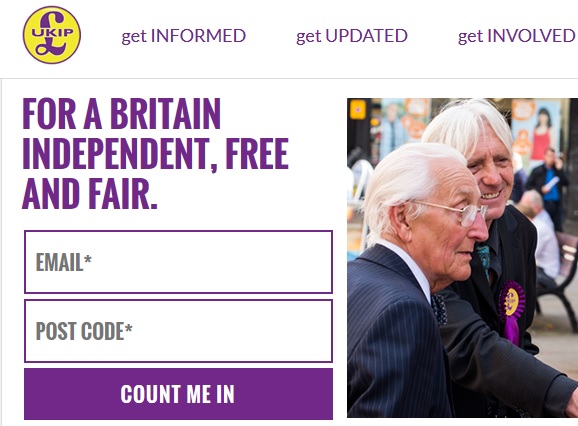
I’ve written over the past few months about questionable compliance by the Conservative, Labour, Liberal Democratic and Scottish National Parties with their obligations under the Data Protection Act 1998 and the Privacy and Electronic Communications (EC Directive) Regulations 2003. And, as I sat down to write this post, I thought I’d check a couple of other parties’ sites, and, sure enough, similar issues are raised by the UKIP and Plaid Cymru sites

ukipplaid

No one except a few enthusiasts in this area of law/compliance seems particularly concerned, and I will, no doubt, eventually get fed up with the dead horse I am flogging. However, a fascinating article in The Telegraph by James Kirkup casts a light on just why political parties might be so keen to harvest personal data, and not be transparent about their uses of it.

Kirkup points out how parties have begun an

extraordinarily extensive – and expensive – programme of opinion polls and focus groups generating huge volumes of data about voters’ views and preferences…Traditional polls and focus groups have changed little in the past two decades. They help parties discover what voters think, what they want to hear, and how best to say it to them. That is the first stage of campaigning. The second is to identify precisely which voters you need to speak to. With finite time and resources, parties cannot afford to waste effort either preaching to the converted or trying to win over diehard opponents who will never change sides. The party that finds the waverers in the middle gains a crucial advantage.

It seems clear to me that the tricks, and opacity, which are used to get people to give up their personal information, are part of this drive to amass more and more data for political purposes. It’s unethical, it’s probably unlawful, but few seem to care, and no one, including the Information Commissioner’s Office (which has, in the past taken robust action against dodgy marketing practices in party politics) has seemed prepared so far to do anything to prevent it. However, the ICO has good guidance for the parties on this, and in May this year, issued a warning to play by the marketing rules in the run-up to local and European elections. Let’s hope this warning, and the threat of enforcement action, extends to the bigger stage of the national elections next year.


2 Comments

Filed under Confidentiality, consent, Data Protection, Information Commissioner, marketing, PECR, Privacy

Political attitudes to ePrivacy – this goes deep

With the rushing through of privacy-intrusive legislation under highly questionable procedures, it almost seems wrong to bang on about political parties and their approach to ePrivacy and marketing, but a) much better people have written on the #DRIP bill, and b) I think the two issues are not entirely unrelated.

Last week I was taking issue with Labour’s social media campaign which invited people to submit their email address to get a number relating to when they were born under the NHS.

Today, prompted by a twitter exchange with the excellent Lib Dem councillor James Baker, in which I observed that politicians and political parties seem to be exploiting people’s interest in discrete policy issues to harvest emails, I looked at the Liberal Democrats’ home page. It really couldn’t have illustrated my point any better. People are invited to “agree” that they’re against female genital mutilation, by submitting their email address.

libdem

There’s no information whatsoever about what will happen to your email address once you submit it. So, just as Labour were, but even more clearly here, the Lib Dems are in breach of the The Privacy and Electronic Communications (EC Directive) Regulations 2003 and the Data Protection Act 1998. James says he’ll contact HQ to make them aware. But how on earth are they not already aware? The specific laws have been in place for eleven years, but the principles are much older – be fair and transparent with people’s private information. And it is not fair (in fact it’s pretty damn reprehensible) to use such a bleakly emotive subject as FGM to harvest emails (which is unavoidably the conclusion I arrive at when wondering what the purpose of the page is).

So, in the space of a few months I’ve written about the Conservatives, Labour and the Lib Dems breaching eprivacy laws. If they’re unconcerned about or – to be overly charitable – ignorant of these laws, then is it any wonder that they railroad each other into passing “emergency” laws (which are anything but) with huge implications for our privacy?

UPDATE: 13.07.14

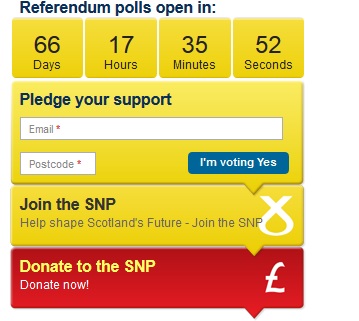
Alistair Sloan draws attention to the Scottish National Party’s website, which is similarly harvesting emails with no adequate notification of the purposes of future use. The practice is rife, and, as Tim Turner says in the comments below, the Information Commissioner’s Office needs to take action.

snp

7 Comments

Filed under consent, Data Protection, PECR, Privacy, transparency

Labour Party website – unfair processing?

Earlier this year I wrote about a questionable survey on the Conservative Party website, which failed to comply with the legal requirements regarding capture of email addresses. It is perhaps unsurprising to see something similar now being done in the name of the Labour Party.

An innocuous looking form on Labour’s donation pages lies underneath a statement that almost 44 million babies have been delivered under NHS care since 1948. The form invites people to find out what number their birth was. There are of course lots of this type of thing on the internet: “What was number one when you were born?” “Find out which Banana Split you are” etc. But this one, as well as asking for people’s date of birth, asks for their (first) name, email address and postcode. And, sure enough, underneath, in small print that I suspect they hope people won’t read, it says

The Labour Party and its elected representatives may contact you about issues we think you may be interested in or with campaign updates. You may unsubscribe at any point

So, they’ll have your email address, your first name and a good idea of where you live (cue lots of “Hi Jon” emails, telling me about great initiatives in my area). All very predictable and dispiriting. And also almost certainly unlawful: regulation 22(2) of The Privacy and Electronic Communications (EC Directive) Regulations 2003 (PECR) says that

a person shall neither transmit, nor instigate the transmission of, unsolicited communications for the purposes of direct marketing by means of electronic mail unless the recipient of the electronic mail has previously notified the sender that he consents for the time being to such communications being sent by, or at the instigation of, the sender

This Labour web page impermissibly infers consent. The European Directive  to which PECR give domestic effect makes clear in recital 40 that electronic marketing requires that prior, explicit consent  be obtained. Furthermore the Information Commissioner’s Office (ICO), issues clear guidance on PECR and marketing, and this says

Organisations must give the customer the chance to opt out – both when they first collect the details, and in every email or text. Organisations should not assume that all customers will be happy to get marketing texts or emails in future…It must be simple to opt out. When first collecting a customer’s details, this should be part of the same process (eg online forms should include a prominent opt-out box…

The ICO’s guidance on political campaigning is (given the likelihood of abuse) disappointingly less clear, but it does say that “An organisation must have the individual’s consent to communicate with them [by email]”. I rather suspect the Labour Party would try to claim that the small print would suffice to meet this consent point, but a) it wouldn’t get them past the hurdle of giving the option to opt out at the point of collection of data, and b) in the circumstances it would crash them into the hurdle of “fairness”. The political campaigning guidance gives prominence to this concept

It is not just in an organisation’s interests to act lawfully, but it should also have respect for the privacy of the individuals it seeks to represent by treating them fairly. Treating individuals fairly includes using their information only in a way they would expect

I do not think the majority of people completing the Labour Party’s form, which on the face of it simply returns a number relating to when they were born, would expect their information to be used for future political campaigning. So it appears to be in breach of PECR, not fair, and also, of course (by reference to the first principle in Schedule One) in breach of the Data Protection Act 1998. Maybe the ICO will want to take a look.

UPDATE:

I see that this page is being pushed quite hard by the party. Iain McNicol, General Secretary, and described as “promoter” of the page has tweeted about it, as have shadow Health Secretary Andy Burnham and Ed Miliband himself. One wonders how many email addresses have been gathered in this unfair and potentially unlawful way.


3 Comments

Filed under consent, Data Protection, Information Commissioner, marketing, PECR