Author Archives: Jon Baines

FOI, data protection and rogue landlords 

On 23rd July the Chartered Institute of Environmental Health (CIEH), in conjunction with the Guardian, published a database of landlords who have been convicted of offences under the Housing Act 2004. This showed, for example, that one landlord has been prosecuted seven times for issues relating to disrepair and poor state of properties rented out. It also showed apparent regional discrepancies regarding prosecutions, with some councils carrying out only one prosecution since 2006.

This public interest investigative journalism was, however not achieved without a fight: in September last year the information Commissioners office (ICO) issued a decision notice finding that the journalists request for this information had been correctly refused by the Ministry of Justice on the grounds that the information was sensitive personal data and disclosure under the Freedom of Information Act 2000 (FOIA) would contravene the MoJ’s obligations under the Data Protection Act 1998 (DPA). Section 40(2) of FOIA provides that information is exempt from disclosure under FOIA if disclosure would contravene any of the data protection principles in Schedule One of the DPA (it also provides that it would be exempt if disclosure would contravene section 10 of the DPA, but this is rarely invoked). The key data protection principle is the first, which says that personal data must be processed fairly and lawfully, and in particular that the processing must meet one of the conditions in Schedule Two, and also – for sensitive personal data – one of the conditions in Schedule Three.

The ICO, in its decision notice, after correctly determining that information about identifiable individuals (as opposed to companies) within the scope of the request was sensitive personal data (because it was about offences committed by those individuals) did not accept the requester’s submission that a Schedule Three condition existed which permitted disclosure. The only ones which could potentially apply – condition 1 (explicit consent) or condition 5 (information already made public by the individual) – were not engaged.

However, the ICO did not at the time consider the secondary legislation made under condition 10: the Data Protection (Processing of Sensitive Personal Data) Order 2000 provides further bases for processing of sensitive personal data, and, as the the First-tier Tribunal (Information Rights) (FTT) accepted upon appeal by the applicant, part 3 of the Schedule to that Order permits processing where the processing is “in the substantial public interest”, is in connection with “the commission by any person of any unlawful act” and is for journalistic purposes and is done with a “view to the publication of those data by any person and the data controller reasonably believes that such publication would be in the public interest”. In fairness to the ICO, this further condition was identified by them in their response to the appeal.

In this case, the information was clearly sought with a view to the future publication in the CIEH’s Magazine, “Environmental Health News” and the requester was the digital editor of the latter. This, the FTT decided, taken with the (objective) substantial public interest in the publication of the information, was sufficient to make disclosure under FOIA fair and lawful. In a passage (paras 28-30) worth quoting in full the FTT said

Unfit housing is a matter of major public concern and has a significant impact on the health of tenants.  The Housing Act is a key mechanism for local authorities to improve housing standards and protect the health of vulnerable tenants.  One mechanism for doing this is by means of prosecution, another is licensing schemes for landlords.  Local authorities place vulnerable families in accommodation outside their areas tenants seek accommodation, The publication of information about convictions under the Housing Act would be of considerable value to local authorities in discharge of their functions and assist prospective tenants and those assisting them in avoiding landlords with a history of breaches of the Housing Act.

The sanctions under the Housing Act are comparatively small and the  opprobrium of a conviction may well not rank with other forms of criminal misbehaviour, however the potential for harm to others from such activity is very great, the potential for financial benefit from the misbehaviour is also substantial.  Breaches of the Housing Act are economically motivated and what is proposed is a method of advancing the policy objective of the Housing Act by increasing the availability of relevant information to key actors in the rented housing market – the local authorities as regulator and purchaser and the tenants themselves.  Any impact on the data subjects will overwhelmingly be on their commercial reputations rather than more personal matters.

The Tribunal is therefore satisfied that not only is the disclosure of this information in the substantial public interest, but also any reasonably informed data controller with  knowledge of the social needs and the impact of such disclosure would so conclude.

It is relatively rare that sensitive personal data will be disclosed, or ordered to be disclosed, under FOIA, but it is well worth remembering the 2000 Order, particularly when it comes to publication or proposed publication of such data under public interest journalism.

The views in this post (and indeed all posts on this blog) are my personal ones, and do not represent the views of any organisation I am involved with..

Leave a comment

Filed under Data Protection, Freedom of Information, Information Commissioner, Information Tribunal, journalism, Open Justice

Porsches, farts and environmental information

A quick post on what I think is a rather remarkable Information Tribunal ruling.

The First-tier Tribunal (Information Rights) (“FTT”) has recently handed down a judgment on a case relating to a request for information sent to the Driver and Vehicle Standards Agency (DVSA) about a safety evaluation of an apparent throttle malfunction in the Porsche Cayman. The request was refused by DVSA on the grounds that section 44 of the Freedom of Information Act 2000 (FOIA) provided an absolute exemption to disclosure, by way of existing restrictions on disclosure of this kind of information within the Enterprise Act 2002. Upon appeal, the Information Commissioner’s Office (ICO) upheld this refusal (pointing out that in fact the correct public authority was not the DVSA, but rather the Department of Transport, of which DVSA is an executive agency).

However, when the request exercised his right of appeal to the FTT, he introduced an argument that in fact the proper regime under which his request should have been considered was the Environmental Information Regulations 2004 (EIR) rather than FOIA, on the grounds that his request concerned an activity that directly affected the environment, namely an activity to regulate vehicle noise emissions. The ICO resisted this, on the basis that

the disputed information concerned a safety test of a certain vehicle “which is not an activity which affects, or is likely to affect, the elements and factors described in Regulation 2(1)(a) or (b) EIR”

This in itself was an interesting argument, touching on issues regarding the Glawischnig remoteness test. This refers to the judgment of the Court of Justice of the European Union in the 2003 case C-316/01 (Eva Glawischnig and Bundesminister für soziale Sicherheit und Generationen) which, observing that Article 2(a) of Directive 90/313 (to which the EIR give UK domestic effect)

classifies information relating to the environment within the meaning of that directive in three categories: information on the state of water, air, soil, fauna, flora, land and natural sites (‘the first category’), information on activities or measures affecting or likely to affect those environmental factors (‘the second category’), and information on activities or measures designed to protect those factors (‘the third category’)

said that

Directive 90/313 is not intended…to give a general and unlimited right of access to all information held by public authorities which has a connection, however minimal, with one of the environmental factors mentioned in Article 2(a). To be covered by the right of access it establishes, such information must fall within one or more of the three categories set out in that provision. [Emphasis added]

However, the FTT in the instant case decided, contrary to the positions of all the parties that “the safety test in this case is not an activity, which can be said to affect the elements of the environment” (the appellant was arguing essentially that “his request concerned an activity that directly affected the environment, namely an activity to regulate vehicle noise emissions”), the EIR were engaged merely because the safety test first required a car to be started, which by extension meant that started engine would produce emissions:

in order to test the issue complained of (i.e. the vehicle throttle response under specific conditions) the vehicle must be driven, or at the very least the engine must be running.
Consequently, by conducting the safety test:
– the DVSA caused emissions by driving the vehicle (r.2(1)(b));
– at the very least those emissions affected the air (r.2(1)(a));
– they did so through a measure (a safety test) which was likely to affect the elements (air) (r.2(1)(c));

But following this argument, the EIR would tend give the public, pace the ruling of the CJEU in Glawischnig, “a general and unlimited right of access to all information held by public authorities which has a connection, however minimal, with [the environment]”? Information, say, held by the DVLA on the number of people who passed their driving test first time would be environmental because by running the driving test the DVLA caused emissions by requiring the tester to drive the car, at the very least those emissions affected the air and they did so through a measure (a driving test) which was likely to affect the elements (air). Or consider DEFRA conducting TB tests on cattle – in order to conduct the test the inspector must travel to a farm, and by doing so DEFRA cause emissions by causing a vehicle to be driven (or a train ride to be taken etc). At the very least those emissions affect the air, and they do so through a measure which is likely to affect the elements (air). Or this: in order to deliver mail, the Royal Mail must drive vehicles which cause emissions. At the very least those emissions affect the air, and they do so through a measure (their policy to use motor vehicles to deliver the mail) which is likely to affect the elements.

What next? Is information on the statement about the benefits of dietary fibre in the human diet environmental information, because by giving it the Department of Health caused more farts (emissions) which affect the air through a measure (the statement) which was likely to affect the (elements) air?

Maybe I’m being silly, but I don’t think I am. Rather, I think the FTT are, and I wonder if the judgment will be appealed.

The views in this post (and indeed all posts on this blog) are my personal ones, and do not represent the views of any organisation I am involved with..

4 Comments

Filed under Environmental Information Regulations, Freedom of Information, Information Tribunal

A life saved, by life savers

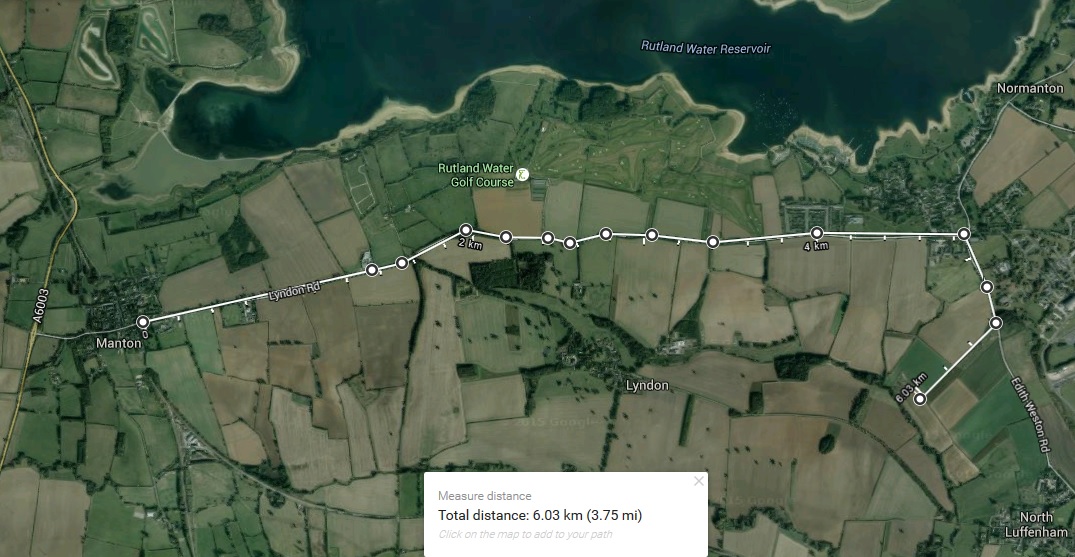
map

Around 10pm on the evening of Tuesday, 4th August, I received a phone call from my sister. My 81 year old father, who has dementia, had gone missing from his care home, and his absence had not been noticed for around four hours. The police were looking for him, but he had not been found in the immediate area. I jumped in the car with my wife, and we drove the eighty miles to Manton, Rutland. There then followed nearly forty-eight hours of constant driving, walking paths, telephone calls and growing despair, as we and the large police and search and rescue presence failed to find my father, or any sign of him. The only strong sightings of him had been from shortly after he must have left the care home.

But yesterday, Thursday, 6th August, around 16:45, my father was found. He had managed, apparently on that first evening, to walk 6 kilometres before either falling, or lying down, in a field of oilseed rape, due to be harvested – we were later told –  the next day. There he had lain for forty-odd hours, in a spot half a mile down a steep heavily rutted farm track so remote that – although some of us had previously searched part way down the track which led to it – it seemed barely credible he could have been there. He was badly dehydrated, and sunburnt (his disappearance coincided – thanks goodness – with some mild and partially sunny weather, and the nights were not cold) but fortunately, although he seems to have fallen in the field, the crops and his clothing (again thank goodness – he had full clothing on, including a fleece and a few layers of clothing) meant he was only slightly bruised. He is now recovering in hospital. The map above shows the route he took, along a busy main road with no pavement, past an army barracks and down the fateful rutted track.

Early on Wednesday morning, I put out a frantic tweet, followed by a few others, and my first ever Facebook post, to support the social media efforts of Leicestershire Police. The response was extraordinary (I even got replies from Alison Moyet and Caroline Flack!) and I can’t thank people enough for doing this, and equally, my gratitude to those who sent me direct messages of support is unbounded. Shortly after posting these messages all my phone’s data services packed up, so any replies or updates were done by borrowing other people’s devices.

But the people who deserve the most thanks (in addition to my so supportive wife) are those who actually helped to find my father. The fantastic local police of Leicestershire and Northamptonshire, and the remarkable volunteers of the various Lowland Rescue organisations: I know there were representatives of Leicestershire, Northamptonshire, Warwickshire and Staffordshire, and if I’ve forgotten anyone, then I apologise and will happily add them [ed. a commenter below tells me there were also rescuers from Nottinghamshire, Yorkshire, Cambridgeshire and Lincolnshire!]. There was no let-up in the searches, except when deep nighttime militated against it, and the planning and coordination were tremendous. They were positive, compassionate, patient when we were impatient, and totally dedicated to finding my father. He owes his life to them, and we can’t ever thank them enough. Our family is making an appropriate donation to Lowland Rescue, and we would strongly encourage everyone to do so: what happened to us could happen to any family.

Donate to Lowland Rescue (via their site)

11 Comments

Filed under Personal

Dear Google…Dear ICO…

On 15 June this year I complained to Google UK. I have had no response, so I have now asked the Information Commissioner’s Office to assess the lawfulness of Google’s actions. This is my email to the ICO

Hi

I would like to complain about Google UK. On 15 June 2015 I wrote to them at their registered address in the following terms

Complaint under Data Protection Act 1998

When a search is made on Google for my name “Jonathan Baines”, and, alternatively, “Jon Baines”, a series of results are returned, but at the foot of the page a message (“the message”) is displayed:

Some results may have been removed under data protection law in Europe. Learn more

To the best of my knowledge, no results have in fact been removed.

The first principle in Schedule One of the Data Protection Act 1998 (DPA) requires a data controller to process personal data fairly and lawfully. In the circumstances I describe, “Jonathan Baines”, “Jon Baines” and the message constitute my personal data, of which you are clearly data controller.

It is unfair to suggest that some results may have been removed under data protection law. This is because the message carries an innuendo that what may have been removed was content that was embarrassing, or that I did not wish to be returned by a Google search. This is not the case. I do not consider that the hyperlink “Learn more” nullifies the innuendo: for instance, a search on Twitter for the phrase “some results may have been removed” provides multiple examples of people assuming the message carries an innuendo meaning.

Accordingly, please remove the message from any page containing the results of a search on my name Jonathan Baines, or Jon Baines, and please confirm to me that you have done so. You are welcome to email me to this effect at [redacted]”

I have had no response to this letter, and furthermore I have twice contacted Google UK’s twitter account “@googleuk” to ask about a response, but have had none.

I am now asking, pursuant to my right to do so at section 42 of the Data Protection Act 1998, for you to conduct an assessment as to whether it is likely or unlikely that the processing by Google UK has been or is being carried out in compliance with the provisions of that Act.

I note that in Case C‑131/12 the Grand Chamber of the Court of Justice of the European Union held that “when the operator of a search engine sets up in a Member State a branch or subsidiary which is intended to promote and sell advertising space offered by that engine and which orientates its activity towards the inhabitants of that Member State” then “the processing is carried out in the context of the activities of an establishment of the controller on the territory of the Member State”. I also note that Google UK’s notification to your offices under section 18 of the Data Protection Act 1998 says “We process personal information to enable us to promote our goods and services”. On this basis alone I would submit that Google UK is carrying out processing as a data controller in the UK jurisdiction.

I hope I have provided sufficient information for you to being to assess Google UK’s compliance with its obligations under the Data Protection Act 1998, but please contact me if you require any further information.

with best wishes,

Jon Baines

Leave a comment

Filed under Data Protection, Information Commissioner

What does it take to stop Lib Dems spamming?

Lib Dems continue to breach ePrivacy law, ICO still won’t take enforcement action.

It’s not difficult: the sending of unsolicited marketing emails to me is unlawful. Regulation 22 of The Privacy and Electronic Communications (EC Directive) Regulations 2003 (PECR) and by extension, the first and second principles in Schedule One of the Data Protection Act 1998 (DPA) make it so. The Liberal Democrats have engaged in this unlawful practice – they know and the Information Commissioner’s Office (ICO) know it, because the latter recently told the former that they have, and told me in turn

I have reviewed your correspondence and the [Lib Dem’s] website, and it appears that their current practices would fail to comply with the requirements of the PECR. This is because consent is not knowingly given, clear and specific….As such, we have written to the organisation to remind them of their obligations under the PECR and ensure that valid consent is obtained from individuals

But the ICO has chosen not to take enforcement action, saying to me in an email of 24th April

enforcement action is not taken routinely and it is our decision whether to take it. We cannot take enforcement action in every case that is reported to us

Of course I’d never suggested they take action in every case – I’d requested (as is my right under regulation 32 of PECR) that they take action in this particular case. The ICO also asked for the email addresses I’d used; I gave these over assuming it was for the purposes of pursuing an investigation but no, when I later asked the ICO they said they’d passed them to the Lib Dems in order that they could be suppressed from the Lib Dem mailing list. I could have done that if I wanted to. It wasn’t the point and I actually think the ICO were out of order (and contravening the DPA themselves) in failing to tell me that was the purpose.

But I digress. Failure to comply with PECR and the DPA is rife across the political spectrum and I think it’s strongly arguable that lack of enforcement action by the ICO facilitates this. And to illustrate this, I visited the Lib Dems’ website recently, and saw the following message

Untitled

Vacuous and vague, I suppose, but I don’t disagree, so I entered an email address registered to me (another one I reserve for situations where I fear future spamming) and clicked “I agree”. By return I got an email saying

Friend – Thank you for joining the Liberal Democrats…

Wait – hold on a cotton-picking minute – I haven’t joined the bloody Liberal Democrats – I put an email in a box! Is this how they got their recent, and rather-hard-to-explain-in-the-circumstances “surge” in membership? Am I (admittedly using a pseudonym) now registered with them as a member? If so, that raises serious concerns about DPA compliance – wrongly attributing membership of a political party to someone is processing of sensitive personal data without a legal basis.

It’s possible that I haven’t yet been registered as such, because the email went on to say

Click here to activate your account

When I saw this I actually thought the Lib Dems might have listened to the ICO – I assumed that if I didn’t (I didn’t) “click here” I would hear no more. Not entirely PECR compliant, but a step in the right direction. But no, I’ve since received an email from the lonely Alistair Carmichael asking me to support the Human Rights Act (which I do) but to support it by joining a Lib Dem campaign. This is direct marketing of a political party, I didn’t consent to it, and it’s sending was unlawful.

I’ll report it to the ICO, more in hope than expectation that they will do anything. But if they don’t, I think they have to accept that a continuing failure to take enforcement against casual abuse of privacy laws is going to lead to a proliferation of that abuse.

The views in this post (and indeed all posts on this blog) are my personal ones, and do not represent the views of any organisation I am involved with..

2 Comments

Filed under consent, Data Protection, enforcement, Information Commissioner, marketing, PECR, spam

What a difference a day makes

Back in 2013 I blogged about a little-known (not unknown, as some commenters thought I was suggesting) oddity of the Freedom of Information Act 2000 (FOIA). This oddity is that a bank holiday falling in any part of the United Kingdom counts as a non-working-day for the purposes of FOIA. So, as January 2nd (or the nearest substitute day) is a bank holiday in Scotland, it is not a working day for the purposes of calculating the maximum timescale for compliance with a request made under FOIA, despite the fact that Scotland has its own Freedom of Information (Scotland) Act 2002.
What “bank holiday” means, according to section 10(6) of FOIA, is 

any day other than a Saturday, a Sunday, Christmas Day, Good Friday or a day which is a bank holiday under the Banking and Financial Dealings Act 1971 in any part of the United Kingdom

And section 1 of the Banking and Financial Dealings Act 1971 says 

the days specified in Schedule 1 to this Act shall be bank holidays in England and Wales, in Scotland and in Northern Ireland as indicated in the Schedule

The Schedule therefore provides a number of dates which are to be considered as bank holidays

All straightforward then? Not quite. Sections 1(2) and 1(3) of The Banking and Financial Dealings Act 1971 also provide that the Queen can effectively remove or add a bank holiday “by proclamation”. What this means has recently been considered by the First-tier Tribunal (Information Rights) (FTT), and it shows that even the Information Commissioner’s Office (ICO) can get this issue wrong sometimes. In the case, the ICO had said in its decision notice that the public authority, Monitor, had complied with its obligation to respond to a FOIA request within twenty working days, because the period involved included two bank holidays within the UK (on 14 July (Northern Ireland) and 4 August (Scotland)). However, when faced with an appeal to the FTT by the requester, the ICO faltered, and

recalculated the 20 day period and concluded that while July 14 was commemorated as the anniversary of the Battle of the Boyne for the purpose of a public holiday in Northern Ireland it was not a bank holiday and accordingly the response from Monitor had been outside the 20 day period

Not so fast, said the FTT – remember section 1(3) of the Banking and Financial Dealings Act 1971? Well, as the London Gazette records, on 14 June 2013 a proclamation was made by Her Majesty, providing that

…We consider it desirable that Monday the fourteenth day of July in the year 2014 should be a bank holiday in Northern Ireland

As the FTT said

The effect of this was to insert a bank holiday in July…accordingly [Monitor] responded within the time limit

All very arcane and abstruse, no doubt, but practitioners and requesters should note that the London Gazette records that on 18 July 2014 Her Majesty also proclaimed that 13th July 2015 would also be a bank holiday. So, for FOI requests whose normal twenty-working-day period includes the date of 13th July this year, everyone needs to bear in mind that, as hard as they may be working on that date, it is not to be counted as a FOIA working day. 

But everyone should also bear in mind that, if they find this tricky, even the ICO gets confused sometimes.

The views in this post (and indeed all posts on this blog) are my personal ones, and do not represent the views of any organisation I am involved with..

8 Comments

Filed under FOISA, Freedom of Information, Information Commissioner, Information Tribunal

Talk on the future of FOI

Mostly because I haven’t posted much on this blog recently, I’m uploading a version of a talk I gave at the recent conference of the National Police Chiefs Council (NPCC). I was asked to talk, alongside FOIKid Bilal Ghafoor, and tribunal judge David Farrer QC, about what the teenage years of the Freedom of Information Act 2000 might look like. After I’d reflected on this, I ended up rather more optimistic than I expected. YMMV, as they say.

Before I talk about the future, and FOI as it enters those awkward teenage years, I wanted to reflect a bit on its early infanthood. Has it achieved what it was hoped it would achieve? Has it worked well?

As is sometimes overlooked, Parliament declined to enact a purpose clause into the 2000 Freedom of Information Act (against the urging of the then Information Commissioner Elizabeth France). So when we talk about whether FOIA has achieved its aims, we are, to an extent, second guessing what Parliament intended. However, in 2012 the Justice Committee conducted post-legislative scrutiny of FOIA, and the Ministry of Justice (drawing on the original White Paper which preceded the Act) identified four objectives for it:

  • openness and transparency;
  • accountability;
  • better decision making;
  • and public involvement in decision making, including increased public trust in decision making by government

And the committee felt that FOIA has achieved the first three but the secondary objective of enhancing public confidence in Government had not been achieved, and was unlikely to be achieved.

And I think this is broadly right: we have seen more openness and transparency – when working well together FOIA feeds into the Transparency Agenda and vice versa. Huge amounts of public sector information have been made available where once it wasn’t. And with openness and transparency come, or should come more accountability and better decision making. But that final objective, involving increasing public trust in decision making, has almost been achieved in the negative – and that is partly to do with how the public hear about FOIA. Many, probably most, major FOIA stories run by the media almost inevitably involve scandal or highlight wasteful practice, and often go hand in hand with litigation aimed at preventing disclosure. The MPs expenses scandal was one of FOIA’s major victories (although, let us not forget, it was a leak to the Telegraph, rather than a final FOIA disclosure, that led to the full details coming out) but while it enhanced FOIA’s status, it’s hard to say it did anything but greatly damage public trust in government, and more widely, politicians.

But the Justice Committee report identified something else, and something very relevant when we start to look to the future of FOIA. It stated that “the right to access public sector information is an important constitutional right” – something which Lady Justice Arden also recognised in her recent Court of Appeal judgment in the Dransfield case. And when something is identified as part of our constitution, it becomes pretty hard to remove it, or amend it to any great extent. The Conservative government appear to be experiencing this at the moment, as their plans to repeal the Human Rights Act have been stalled. The Human Rights Act can also be said to have achieved constitutional status – by incorporating the European Convention on Human Rights into the domestic law of the UK, it represented a major shift in how individual rights are protected under British law. It may well end up being the case that the only way the Act could be repealed would be by replacing it with something essentially the same (or by pulling out of the Convention, and pulling out of Europe) and even then, as Lord Bingham said

“Which of these rights…would we wish to discard? Are any of them trivial, superfluous, unnecessary? Are any them un-British?”

The rights enshrined in the European Convention are fundamental, and they’re not going to go away, and when one considers that one of them – Article 10 – contains not just the right to freedom of expression, but the right to receive and impart information (subject to necessary and lawful conditions) one can begin to perceive that a Freedom of Information Act helps give effect to this fundamental right.

A majority of the Supreme Court, in the Kennedy judgment last year, went even further, and said that a (qualified) right to receive information from a public authority was not just enshrined in the Convention Rights, but existed (and always has existed) under the Common Law.

What I’m saying, by going off on a somewhat legalistic tangent, is that the right to request and receive public sector information is so fundamentally embedded in our legal and constitutional landscape, that I don’t see any realistic challenge to the principle (and I doubt any of you would). But it also means that any tinkering with the right becomes correspondingly difficult. And this is why although I think FOI will have some teenage tantrums, it won’t have a huge teenage meltdown and emerge from its bedroom a completely different individual.

But with that important caveat, what might we see?

Well, under Francis Maude in the Cabinet Office and Chris Grayling at the Ministry of Justice (although Lib Dem Simon Hughes had the actual FOI brief) we saw significant strides, and a lot of fine words, about the importance of transparency, with Maude even saying in 2012

“I’d like to make Freedom of Information redundant, by pushing out so much data that people won’t have to ask for it”

But they have all gone on to other things – Maude to the Lords, Grayling to Leader of the Commons and Simon Hughes back to his day job, after losing his seat last month. Will this lead to changes? Well, still very much in post is David Cameron, and he has spoken before about his concerns about FOI “furring up the arteries of government” and of FOI’s “buggeration factor”, which doesn’t bode well for those of us who support the Act. And minister with responsibility for FOI (under Michael Gove as Justice Secretary) is Dominic Raab. Raab is strong on civil liberties and is known to be a frequent user of FOI in his parliamentary and constituency work. One of his targets was the Police Federation – in 2011 he sent requests to all forces asking for figures on the number of police staff working full-time for the Federation. But Gove is reputed not to be so keen on FOI – indeed, in 2011 his then Department of Education was found to have used private email accounts to conduct government business, apparently in the belief that this took them outside FOIA.

It does seem clear that any changes to FOIA are not high on the government’s list of priorities: there was nothing in the Conservatives’ election manifesto, and there have been no obvious pronouncements in the early days.

For a flavour though of what might be on the cards it’s instructive to go back to the government response to the post-legislative scrutiny. On the subject of FOI cost limits there was a suggestion that further factors might be taken into account – so, added to the costs of locating and retrieving information it might become possible to take into account consideration and redaction time. This could have more profound effects that is immediately apparent – as most of you will know, those two activities can take up a large amount of time, and if that change were brought in I think we would see a huge increase in cost refusals.

Another related suggestion was that for costs purposes requests from the same person or group of persons could be aggregated EVEN where there was no similarity between the subject of the requests. It is not hard to see how this would be devastating for some journalists who make use of FOI.

And a further suggestion was the introduction of fees for appealing a case to the Information Tribunal. This would be unlikely to affect public authorities, but requesters could well be dissuaded. No doubt some of those would be the more speculative, persistent or frivolous of requesters, but I would be concerned that some well-intentioned requesters would decide not to exercise their rights if such a change were made.

On the more “pro-FOI” side, we are likely to see further public authorities made subject to FOIA. ACPO of course came in in 2012, Network Rail this year, and Theresa May has made clear that she would like to see the Police Federation covered.

But also discussions need to be had about the extent to which private contractors performing public functions are caught by FOI. The government has previously indicated that it thinks this can be achieved through appropriate contractual provisions, but I’m dubious – without a clear legal obligation, and associated enforcement mechanism, I struggle to see why this would happen.

So, despite my optimism that the fundamental principles of FOI are now constitutionally embedded, I don’t necessarily think there will be no changes. But I continue to think they will be essentially minor, and this is because I think there is a further factor which protects those fundamental principles. As I said, Dominic Raab has traditionally used FOI to gather information to better help him in his job. And thousands and thousands of other people do so. Journalists are the most obvious example (and when it comes to defenders of the right to receive information you couldn’t ask for a more vocal group) but campaign groups, other public authorities, academics and private citizens do so. And for this reason FOI is popular. Unlike the Human Rights Act there are no (or very few – I don’t know of any) journalists campaigning for FOIA’s repeal. Politicians don’t campaign on a platform of opposition to the right to receive public information.

FOI does promote better openness and transparency; better accountability; better decision making, and even if it hasn’t yet, and probably never will, improve the public trust in government decision-making, one thing which would further destroy that trust would be changes to make public authorities less accountable. And the media and campaigners would be lined up to make the point vociferously.

FOI may, in its teenage years, suffer from its own equivalent of angst, anger and acne, but it will have strong friends to support it.

The views in this post (and indeed all posts on this blog) are my personal ones, and do not represent the views of any organisation I am involved with..

4 Comments

Filed under Freedom of Information, transparency

No Information Rights Levy for ICO – where now for funding?

The ICO’s plan for an “information rights levy” appears to have been scuppered by the government. But is retaining data protection notification fees the way to solve the funding problem?

Back in the heady days of January 2012, when a naive but optimistic European Commission proposed a General Data Protection Regulation (GDPR), to replace the existing 1995 Directive, one of the less-commented-on proposals was to remove the requirement for data controllers to notify their processing activities to the national data protection authority. However, the UK Information Commissioner’s Office (ICO) certainly noticed it, because the implications were that, at a stroke, a large amount of ICO funding would disappear. Currently, section 18(5) of the Data Protection Act 1998 (DPA), and accompanying secondary legislation, mean that data controllers (unless they have an exemption) must pay an annual fee to the ICO of either £35 or £500 (depending upon the size of the organisation). In 2012-2013 this equated to an estimated income of £17.4m, and this income effectively funds all of the ICO’s data protection regulatory actions (its FOI functions are funded by grant-in-aid from the Ministry of Justice).

Three years later, and the GDPR is still not with us. However, it will eventually be passed, and when it is, it seems certain that the requirement under European law to notify will be gone. Because of this, as the Justice Committee recognised in 2013, alternative ICO funding means need to be identified as soon as possible. The ICO’s preferred choice, and one which Christopher Graham has certainly been pushing for, was an “Information Rights Levy”, the details of which were not specified, but which it appears was proposed to be paid by data controllers and public authorities (subject to FOI) alike. In the 2013/14 ICO Annual Report Graham was bullish in calling for action:

Parliament needs to get on with the task of establishing a single, graduated information rights levy to fund the important work of the ICO as the effective upholder of our vital right to privacy and right to know

But this robust approach doesn’t seem to have worked. At a recent meeting of the ICO Management Board a much more pessimistic view emerges. In a report entitled “Registration Fee Strategy” it is said that

The ICO has previously highlighted the need for an ‘information rights fee’ or one fee, paid by organisations directly to the ICO, to fund all information rights activities. Given concerns across government that this would result in private sector cross subsidising public sector work, the ICO recognises that this is unlikely in the short term

The report goes on, therefore, to talk about proposed changes to the current fee/notification process, and about ways of identifying who needs to pay. 

But, oddly, it seems to assume that although the GDPR will remove the requirement for a data controller  to notify processing to the ICO, the UK will retain the discretion to continue with such arrangements (and to charge a fee). I’m not sure this is right. As I’ve written previously, under data protection law at least some recreational bloggers have a requirement to notify (and pay a fee), and the legal authorities are clear that the law’s ambit extends to, for instance, individuals operating domestic CCTV, if that CCTV covers public places where identifiable individuals are. Indeed, as the 2004 Lindqvist case found 

The act of referring, on an internet page, to various persons and identifying them by name or by other means, for instance by giving their telephone number…constitutes ‘the processing of personal data…[and] is not covered by any of the exceptionsin Article 3(2) of Directive 95/46 [section 36 of the DPA transposes Article 3(2) into domestic law]

It is arguable that, to varying extents, we are all data controllers now (and ones who will struggle to avail ourselves of the data protection exemption for domestic purposes). Levying a fee on all of us, in order that we can lawfully express ourselves, has the potential to be a serious infringement of our right to freedom of expression under Article 10 of the European Convention on Human Rights, and even more directly, Article 11 of the Charter of Fundamental Rights of the European Union.

The problem of how to effectively fund the ICO in a time of austerity is a challenging one, and I don’t envy those at the ICO and in government who are trying to solve it, but levying a tax on freedom of expression (which notification arguably already is, and would almost certainly be if the GDPR doesn’t actually require notification) is not the way to do so.

The views in this post (and indeed all posts on this blog) are my personal ones, and do not represent the views of any organisation I am involved with..

1 Comment

Filed under Data Protection, Directive 95/46/EC, GDPR, Information Commissioner, Uncategorized

Google’s Innuendo

If you search on Google for my name, Jon Baines, or the full version, Jonathan Baines, you see, at the foot of the page of search results

Some results may have been removed under data protection law in Europe. Learn more

Oh-ho! What have I been up to recently? Well, not much really, and certainly nothing that might have led to results being removed under data protection law. Nor similarly, have John Keats, Eleanor Roosevelt and Nigel Molesworth (to pick a few names at random), a search on all of whose names brings up the same message. And, of course, if you click the hyperlink marked by the words “Learn more” you find out in fact that Google has simply set its algorithms to display the message in Europe

when a user searches for most names, not just pages that have been affected by a removal.

It is a political gesture – one that reflects Google’s continuing annoyance at the 2014 decision – now forever known as “Google Spain” – of the Court of Justice of the European Union which established that Google is a data controller for the purpose of search returns containing personal data, and that it must consider requests from data subjects for removal of such personal data. A great deal has been written about this, some bad and some good (a lot of the latter contained in the repository compiled by Julia Powles and Rebekah Larsen) and I’m not going to try to add to that, but what I have noticed is that a lot of people see this “some results may have been removed” message, and become suspicious. For instance, this morning, I noticed someone tweeting to the effect that the message had come up on a search for “Chuka Umunna”, and their supposition was that this must relate to something which would explain Mr Umunna’s decision to withdraw from the contest for leadership of the Labour Party. A search on Twitter for “some results may have” returns a seething mass of suspicion and speculation.

Google is conducting an unnecessary exercise in innuendo. It could easily rephrase the message (“With any search term there is a possibility that some results may have been removed…”) but chooses not to do so, no doubt because it wants to undermine the effect of the CJEU’s ruling. It’s shoddy, and it drags wholly innocent people into its disagreement.

Furthermore, there is an argument that the exercise could be defamatory. I am not a lawyer, let alone a defamation lawyer, so I will leave it to others to consider that argument. However, I do know a bit about data protection, and it strikes me that, following Google Spain, Google is acting as a data controller when it processes a search on my name, and displays a list of results with the offending “some results may have been removed” message. As a data controller it has obligations, under European law (and UK law), to process my personal data “fairly and lawfully”. It is manifestly unfair, as well as wrong, to insinuate that information relating to me might have been removed under data protection law. Accordingly, I’ve written to Google, asking the message to be removed

Google UK Ltd
Belgrave House
76 Buckingham Palace Road
London SW1W 9TQ

16 May 2015

Dear Google

Complaint under Data Protection Act 1998

When a search is made on Google for my name “Jonathan Baines”, and, alternatively, “Jon Baines”, a series of results are returned, but at the foot of the page a message (“the message”) is displayed:

Some results may have been removed under data protection law in Europe. Learn more

To the best of my knowledge, no results have in fact been removed.

The first principle in Schedule One of the Data Protection Act 1998 (DPA) requires a data controller to process personal data fairly and lawfully. In the circumstances I describe, “Jonathan Baines”, “Jon Baines” and the message constitute my personal data, of which you are clearly data controller.

It is unfair to suggest that some results may have been removed under data protection law. This is because the message carries an innuendo that what may have been removed was content that was embarrassing, or that I did not wish to be returned by a Google search. This is not the case. I do not consider that the hyperlink “Learn more” nullifies the innuendo: for instance, a search on Twitter for the phrase “some results may have been removed” provides multiple examples of people assuming the message carries an innuendo meaning.

Accordingly, please remove the message from any page containing the results of a search on my name Jonathan Baines, or Jon Baines, and please confirm to me that you have done so. You are welcome to email me to this effect at [REDACTED]

With best wishes,
Jon Baines


The views in this post (and indeed all posts on this blog) are my personal ones, and do not represent the views of any organisation I am involved with. Some words may have been removed under data protection law.

7 Comments

Filed under Data Protection, Europe

Shameless

Only very recently I wrote about how the Liberal Democrats had been found by the Information Commissioner’s Officer (ICO) to have been in breach of their obligations under anti-spam laws (or, correctly, the ICO had determined it was “unlikely” the Lib Dems had complied with the law). This was because they had sent me unsolicited emails promoting their party without my consent, in contravention of the Privacy and Electronic Communications (EC Directive) Regulations 2003 (PECR). The ICO told me that “we have written to the organisation to remind them of their obligations under the PECR and ensure that valid consent is obtained from individuals”.

Well, the reminder hasn’t worked: today I went on the Lib Dem site and noticed the invitation to agree that “The NHS needs an extra £8bn”. Who could disagree? There was a box to enter my email address and “back our campaign”. Which campaign did they mean? Who knows? I assumed the campaign to promote NHS funding, but there was no privacy notice at all (at least on the mobile site). I entered an email address, because I certainly agree with a campaign that the NHS needs an extra £8bn pounds, but what I certainly didn’t do was consent to receive email marketing.

Untitled

But of course I did…within eight hours I received an email from someone called Olly Grender asking me to donate to the Lib Dems. Why on earth would I want to do that? And a few hours later I got an email from Nick Clegg himself, reiterating Olly’s message. Both emails were manifestly, shamelessly, sent in contravention of PECR, only a couple of weeks after the ICO assured me they were going to “remind” the Lib Dems of the law.

Surely the lesson is the same one the cynics have told us over the years – don’t believe what politicians tell you.

And of course, only this week there was a further example, with the notorious Telegraph “business leaders” letter. The open letter published by the paper, purporting to come from 5000 small business owners, had in fact been written by Conservative Campaign Headquarters, and signatories  were merely people who had filled in a form on the Conservative party website agreeing to sign the letter but who were informed in a privacy notice that “We will not share your details with anyone outside the Conservative Party”. But share they did, and so it was that multiple duplicate signatories, and signatories who were by no means small business owners, found their way into the public domain. Whether any of them will complain to the ICO will probably determine the extent to which this might have been a contravention, not of PECR (this wasn’t unsolicited marketing), but of the Data Protection Act 1998, and the Conservatives’ obligation to process personal data fairly and lawfully. But whatever the outcome, it’s another example of the abuse of web forms, and the harvesting of email addresses, for the promotion of party political aims.

I will be referring the Lib Dems matter back to the ICO, and inviting them again (they declined last time) to take enforcement action for repeat and apparently deliberate, or reckless, contraventions of their legal obligations under PECR.

The views in this post (and indeed all posts on this blog) are my personal ones, and do not represent the views of any organisation I am involved with.

1 Comment

Filed under consent, Data Protection, Information Commissioner, marketing, PECR, privacy notice, spam